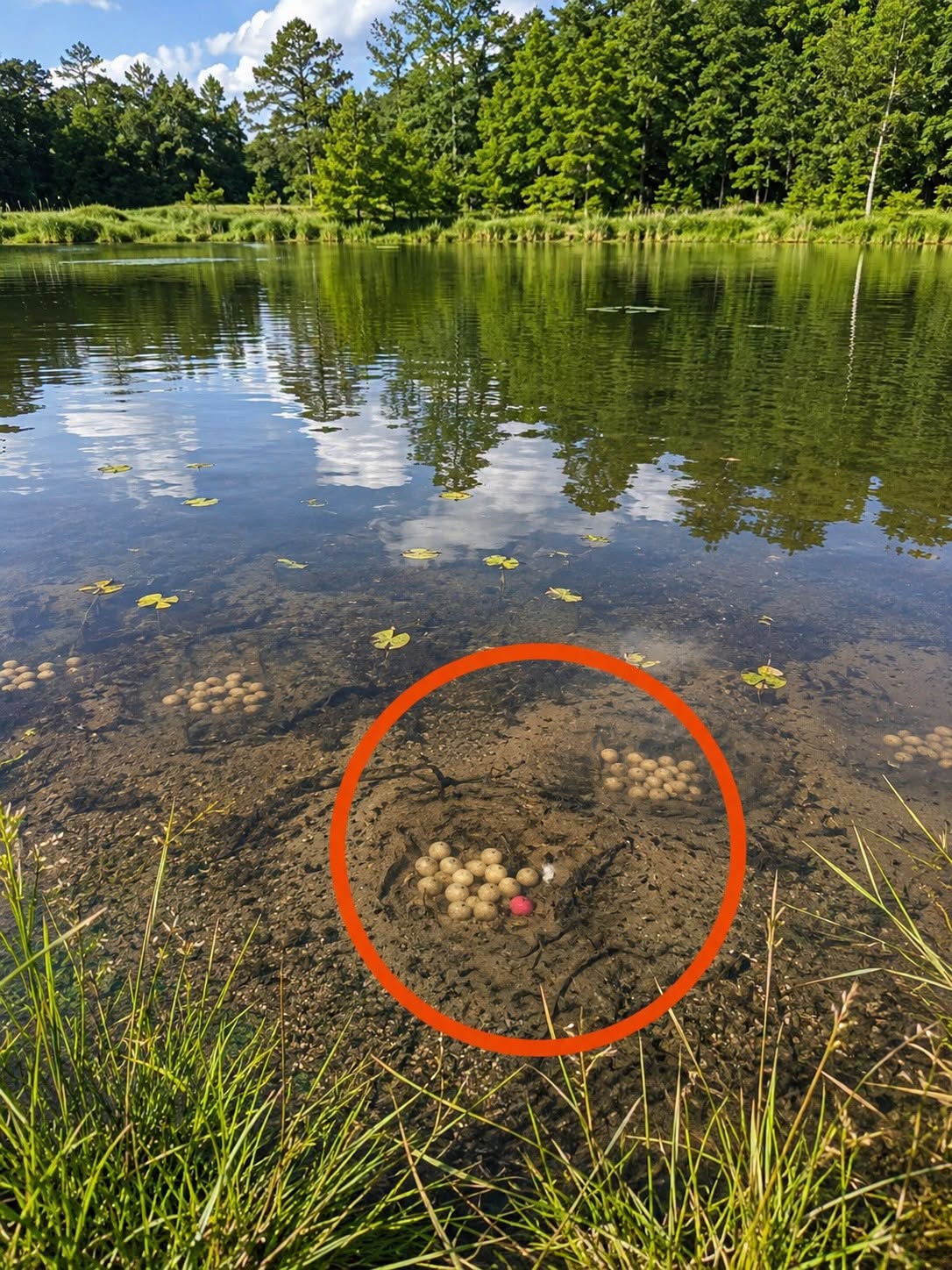
Billions of Golf Balls Are Slowly Poisoning America’s Lakes — and a Simple Switch Could Stop It
Every year, American golfers hit more than a billion balls into the water — and walk away. What they leave behind will still be there long after everyone alive today is gone.
A 2024 CNN investigation put a number to what many in the sport had quietly ignored for decades: U.S. golfers lose over 1.5 billion golf balls every year, based on estimates from Found Golf Balls CEO Shaun Shienfield, who recovers and resells millions of lost balls across the U.S. and Canada annually. Laid end to end, that single year’s losses would circle the Earth more than once. aol
And almost none of them come back up.
What’s Actually Sitting at the Bottom of That Pond
The average golfer treats a water hazard shot as a minor inconvenience — a lost sleeve, a two-stroke penalty, a muttered curse. What they rarely consider is what happens to the ball over the next century.
Each golf ball takes between 100 and 1,000 years to decompose, leaching microplastics and chemicals into soil and water throughout that entire span. As the outer polymer shell slowly breaks apart, it releases synthetic rubber compounds and — according to Danish Golf Union research — dangerous levels of zinc, a heavy metal toxic to fish and other aquatic life even at low concentrations. Earth911
In cold freshwater environments with limited sunlight, the process is even slower. Golf balls’ polymer-based construction is specifically engineered to resist moisture, pressure, and temperature change — the exact conditions found in most lakes and ponds. Playgreenly
The balls don’t dissolve. They fragment. And those fragments go everywhere.
Tens of Thousands of Tons — Every Single Year
The scale becomes almost incomprehensible when the math is applied nationally. Researcher Matthew Savoca, who has studied plastic pollution in aquatic environments, told CNN: “Just in America, you’re talking about tens of thousands of tons of this debris, every year. It’s really hard to wrap your mind around.” CNN
Golf courses are not isolated ecosystems. Microplastics and chemicals from golf balls accumulate over time, affecting aquatic life and water quality — and from there, they migrate. They enter fish tissue. They move downstream into rivers, wetlands, and in some cases the same watersheds that supply drinking water to nearby communities. Playgreenly
Only an estimated 150 million balls per year are recovered and recycled in the U.S. That leaves well over a billion entering the environment annually, with no recovery plan and no regulatory requirement to do anything about it. Yahoo Sports
The Fix Is Already on the Shelf
Here’s what makes this story different from most environmental crises: the solution exists. It has existed for years. It just hasn’t been adopted at scale.
Biodegradable golf balls — designed to dissolve safely in water within weeks rather than centuries — are commercially available and growing fast. The biodegradable golf ball market was valued at $15 million in 2024 and is projected to reach $50 million by 2033, growing at a compound annual rate of 15%. Brands including AlbusGolf are already selling performance-grade dissolving balls that leave no toxic residue behind. Verified Market Reports
Eco-friendly launches now represent 35% of new golf products, with the biodegradable category specifically growing 21% since 2022. Industryresearch
The momentum is real. But so is the gap. The overall golf ball market is worth more than $1.3 billion globally — meaning the biodegradable segment currently represents less than 2% of total sales. The mainstream hasn’t moved yet.
What We Know
U.S. golfers lose an estimated 1.5 billion balls per year; the global figure could reach 3–5 billion annually CNN
Each ball takes 100–1,000 years to decompose, releasing microplastics and heavy metals throughout Earth911
Danish Golf Union research identified dangerous zinc concentrations leached from decomposing solid-core balls
Only around 150 million balls per year are recovered and recycled in the U.S. — a fraction of what’s lost Yahoo Sports
The biodegradable golf ball market is growing at 15% annually but remains a tiny share of overall sales Verified Market Reports
Tightening microplastic pollution regulations are already compelling some manufacturers to shift toward biodegradable components and bio-based resins Technavio
No federal regulation currently requires biodegradable materials in golf balls sold or used in the U.S.
Why This Matters — and Why It’s About to Get Harder to Ignore
Golf isn’t a niche sport. More than 40 million Americans play, and the U.S. has over 16,000 courses — the vast majority of them built around or adjacent to natural water features. Many of those water features connect directly to broader ecosystems, rivers, and public water supplies.
For decades, the “it’s just one ball” logic has insulated the sport from scrutiny. But regulators are beginning to close that window. Tightening microplastic pollution regulations are compelling a shift toward biodegradable components, challenging manufacturers to maintain performance standards while reducing their environmental footprint. Technavio
Consumer pressure is building too. A generation of golfers who grew up with climate change as a lived reality — not an abstraction — is asking harder questions about what their hobby leaves behind.
The technology to fix this is sitting on store shelves right now, priced competitively, and performing well enough for recreational play. What’s missing isn’t innovation.
It’s the decision — by golfers, by courses, and eventually by regulators — that a ball lost in a lake shouldn’t still be poisoning it in the year 3026.