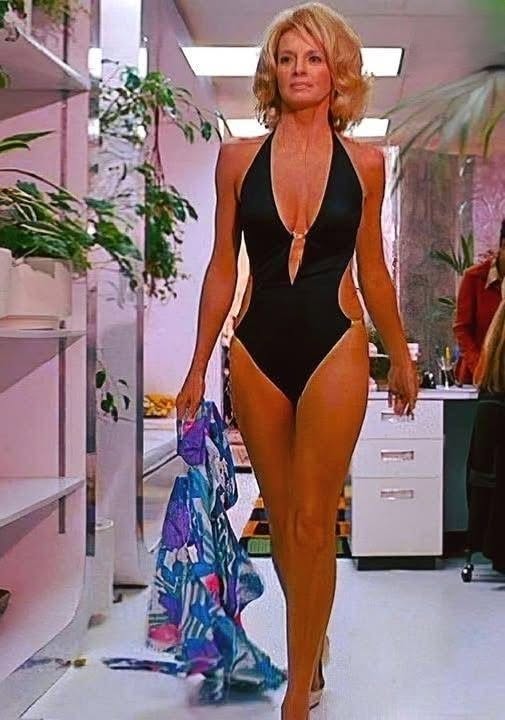
Long before the era of social media, one woman defined the “cool” of Hollywood. With a sharp gaze and an even sharper wit, Angie Dickinson didn’t just walk onto a screen; she commanded it. From her breakout in Rio Bravo to her groundbreaking role as Pepper Anderson in Police Woman, she was the face of strength and style for decades.
Yet, in recent years, the legendary star has become a subject of intense, often sensationalized, digital speculation. Clips circulating online paint a picture of a “forgotten” and “lonely” star, often peddling unverified claims about secret confessions and tragic final years. But the reality of Dickinson’s life is far more grounded—and perhaps more powerful—than the clickbait suggests.
A Career Built on Breaking Molds
Born in 1931 in Kulm, North Dakota, Dickinson brought a “prairie work ethic” to the aircraft factories of California before a beauty contest catapulted her into the orbit of Hollywood’s elite. By the 1970s, she wasn’t just another starlet; she was a cultural phenomenon. As the lead of Police Woman, she shattered the glass ceiling for women on television, proving that a female protagonist could be tough, intellectual, and feminine simultaneously.
“At that time it seemed very logical to find that women were as good as men in any way,” Dickinson once told PBS, reflecting on a time when women in lead roles were rarities. She paved the way for every female-led crime drama that followed, from Charlie’s Angels to Cagney and Lacey.
Choosing Silence Over Applause
While the internet often speculates about her “disappearance” from the public eye, those close to her and her own infrequent interviews tell a different story. Dickinson’s life was punctuated by profound personal loss, most notably the 2007 death of her daughter, Nikki. Following a career that spanned over 50 major films and decades of high-profile scrutiny, her retreat from the spotlight appears less like a tragedy and more like a deliberate, hard-won choice.
She has famously turned down opportunities to participate in “tell-all” media events, such as the classic program This Is Your Life, and has consistently declined the industry’s pressure to write an autobiography. In an industry that demands constant reinvention and transparency, Dickinson has maintained the one thing money can’t buy: her own privacy.
What We Know
Professional Legacy: She is an icon of the “Golden Age” and a pioneer in TV, with a Golden Globe and a star on the Hollywood Walk of Fame.
Personal Life: She was married to composer Burt Bacharach; their daughter, Nikki, died by suicide in 2007.
Current Status: Retired since 2009, she has chosen to live away from the constant pressures of the Hollywood machine.
Media Distinctions: Much of the “tragic” content circulating about her online is unverified speculation by content creators rather than substantiated reports.
Why This Matters
The fascination with Dickinson’s “final years” reveals a broader cultural discomfort with aging in the public eye. We are conditioned to expect our stars to perform until their final act, often confusing the absence of news with a tragedy of circumstances.
In a world where every detail of a celebrity’s life is mined for content, Angie Dickinson’s choice to simply “be”—unheard, unfilmed, and uninterviewed—is perhaps her most radical act of independence yet. She remains a reminder that the true measure of a life isn’t the number of headlines it generates, but the quiet peace found once the cameras finally stop rolling.