Why Some Tree Trunks Are Painted White — And It’s Not What Most People Think
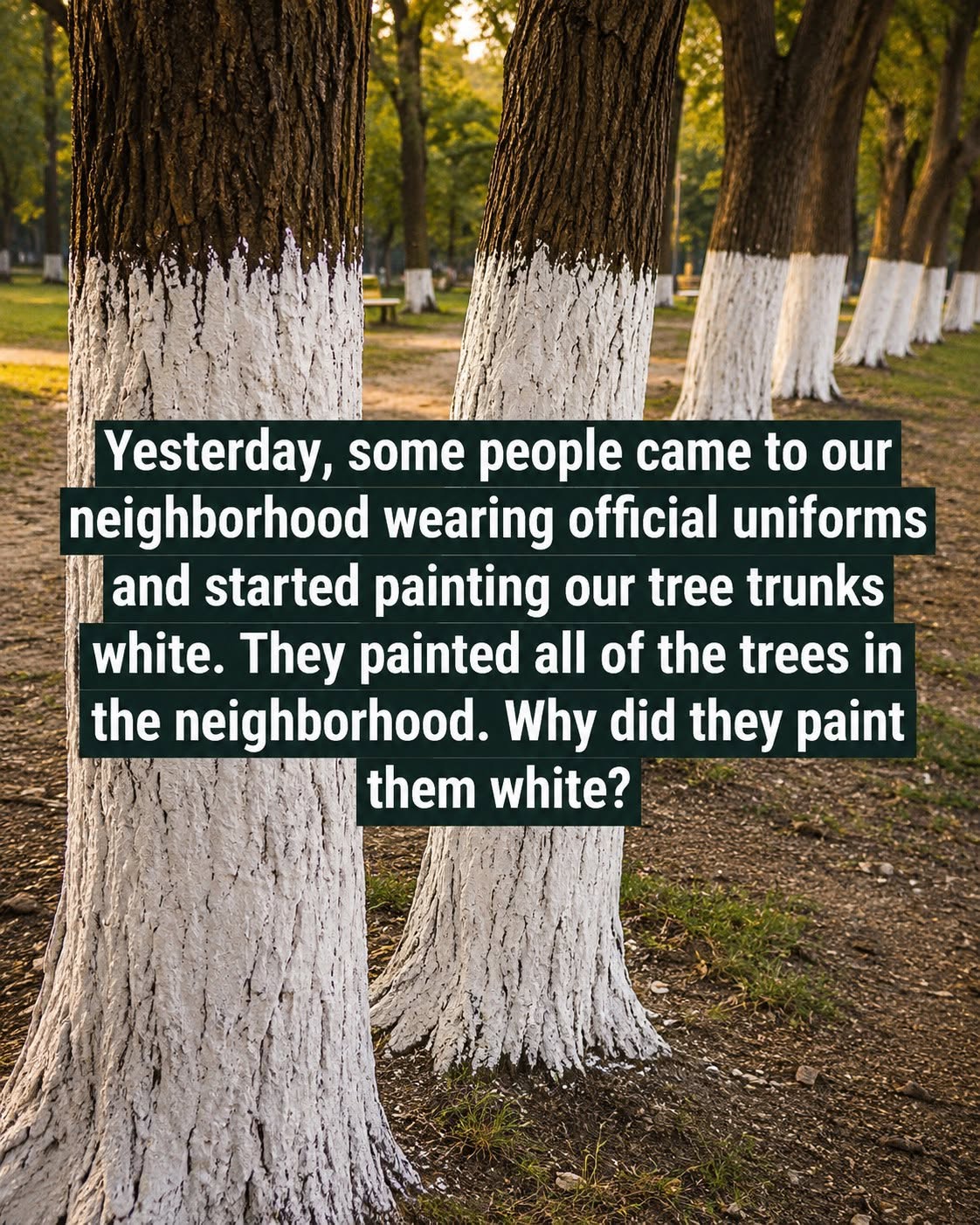
Drive through any orchard or older neighborhood in winter, and you might notice it: trees with the bottom of their trunks painted bright white, almost like socks. It looks deliberate. It is.
A Painted Trunk Isn’t Decoration — It’s a Defense System
The white coating is a centuries-old technique used by orchardists, arborists, and home gardeners to protect trees from a surprisingly common winter injury called sunscald.
Sunscald happens because of how winter sunlight behaves. On a bright, cold day, low-angle sun beats directly onto the south or southwest side of a bare tree trunk. That intense light warms the bark enough to wake dormant cells on that side of the tree. Then the sun sets — or a cold front rolls in — and temperatures crash. Cells that were just warmed and active get hit with a sudden freeze, and the tissue dies. PlantTalk ColoradoPlantTalk Colorado
The damage doesn’t always show up right away. Weeks or months later, that spot on the bark can appear sunken and discolored, then crack or peel away in patches, exposing dead wood underneath. PlantTalk Colorado
The Fix Is Almost Embarrassingly Simple
The solution is reflectivity. Tests have shown that a coat of white paint or whitewash can keep trunk temperatures from spiking by more than 5.6 degrees Celsius compared to bare bark — enough to prevent the dangerous freeze-thaw cycle that splits bark open. University of Florida
Most extension programs recommend a specific approach rather than just “any white paint.” The University of California’s Integrated Pest Management program suggests diluting white or light-colored interior latex paint with an equal amount of water, then coating the vulnerable lower trunk. Some growers use an older-school whitewash recipe instead — a mix of hydrated lime and salt water, a method still recommended by agricultural extension services. Weekand
Not Every Tree Needs It — But Some Really Do
This isn’t a universal requirement. Mature trees with thick, established bark are rarely at risk. The real danger is to young, thin-barked, or recently transplanted trees — and especially certain species. Apples, cherries, and peaches are among the fruit trees most commonly affected by sunscald. Weekand
That’s why the practice is most visible in orchards. Orchardists often whitewash trunks specifically to reflect winter sunlight, and while it works well, it’s generally seen as more acceptable-looking in a working orchard than on a front lawn. PlantTalk Colorado
There’s a Bonus Most People Don’t Expect
The white coating doesn’t just regulate temperature — it also makes life harder for pests. Tree borers are drawn to trunks already weakened by sunscald, so preventing the cracking removes their entry point. The paint layer itself can also make bark harder for insects to climb and less appealing for animals like deer and rabbits looking to gnaw on tender bark. aol
What We Know
Sunscald is caused by rapid heating and cooling of bark in winter, not by disease or pests directly
White paint reflects sunlight and measurably reduces trunk temperature swings
Diluted white latex paint or traditional lime whitewash are the methods recommended by agricultural extension programs
Young trees and thin-barked species — especially fruit trees — are most at risk
The treatment also offers secondary protection against borers and bark-gnawing animals
Claims that drought stress increases sunscald risk remain unproven, according to extension research
Why This Matters
Millions of Americans plant fruit trees, ornamentals, and young saplings every year, often without knowing their investment is vulnerable to a single hard winter. A tree that survives years of care can split open from one cold night — and the visible white “socks” on trunks across the country are a quiet, low-cost insurance policy against that loss.
It’s also a small reminder that not every odd-looking thing in nature is a mystery. Sometimes it’s just good, old-fashioned care — out in the open, in plain white paint.