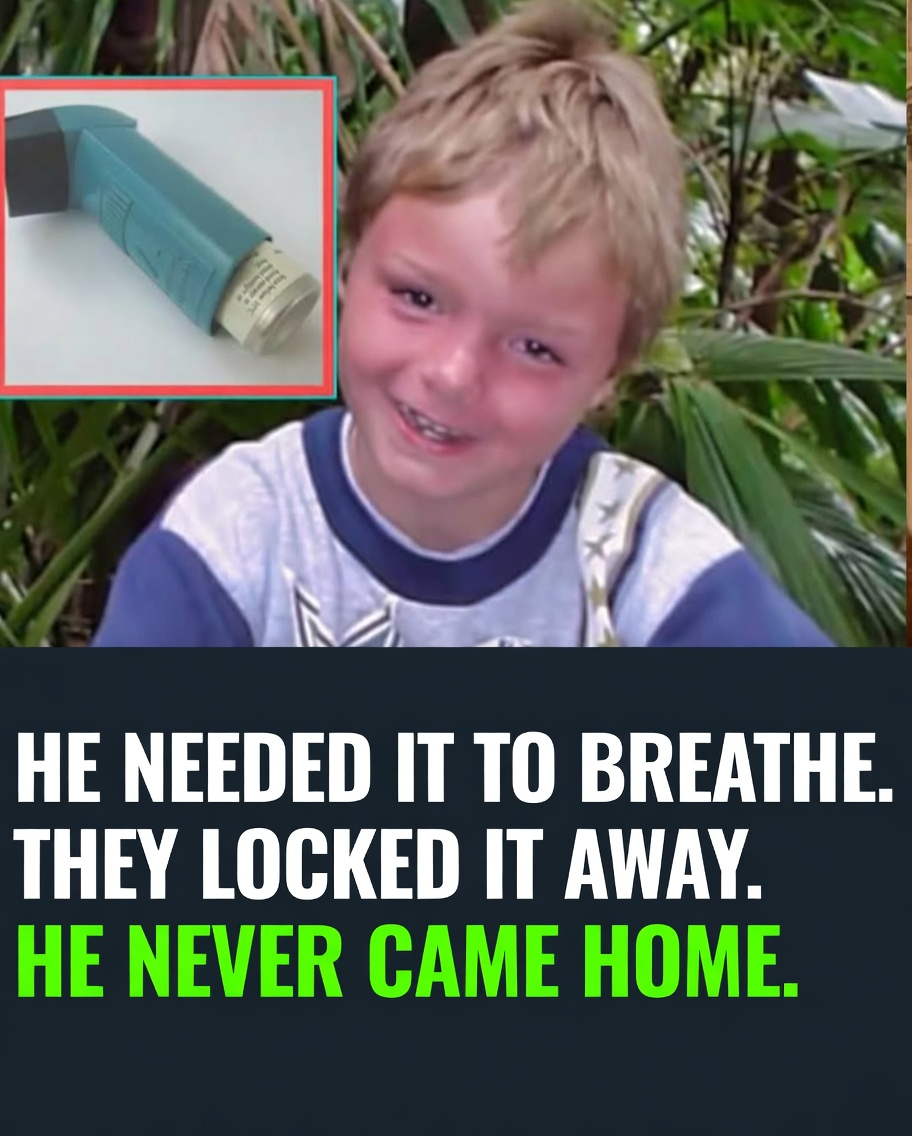
On October 9, 2012, 12-year-old Ryan Gibbons walked onto the playground at his school in Straffordville, Ontario, expecting to return to class like any other day. Instead, he suffered a severe asthma attack that would ultimately claim his life.
The tragedy was not a random accident. It was the result of a strict, inflexible school policy that prohibited students from keeping their own rescue inhalers on their person. Despite having a physician’s authorization to carry his medication, Ryan’s inhalers were repeatedly confiscated by school staff and locked away in the principal’s office. When he began struggling to breathe, his friends tried to rush him to the office to retrieve his device—but they couldn’t get there in time.
A Preventable Tragedy
Ryan’s death sent shockwaves through Canada, exposing a dangerous disconnect between rigid “zero-tolerance” rules and the reality of life-threatening medical conditions. His mother, Sandra Gibbons, emerged from her grief to lead a years-long campaign, demanding that no other child be forced to rely on a locked office door for a life-saving medication.
Her persistence sparked a legislative revolution. In 2015, the Ontario government passed “Ryan’s Law,” a landmark statute that forces school boards to develop standardized asthma policies and, crucially, mandates that schools allow children to carry their rescue inhalers with them at all times.
What We Know
The Incident: On October 9, 2012, Ryan Gibbons collapsed during recess after an asthma attack.
The Barrier: School policy required inhalers to be stored in the principal’s office. Ryan’s personal inhalers were confiscated by staff prior to the incident despite his mother’s efforts to provide a doctor’s note.
The Legislation: Bill 135, or “Ryan’s Law,” was enacted in 2015 to mandate that students have ready access to their prescribed asthma medication.
The Impact: The law requires school principals to create individual plans of care for students with asthma, including training for staff on how to recognize and treat an attack.
Why This Matters Today
While “Ryan’s Law” is specific to Ontario, the underlying issue remains a critical concern for parents across the United States. While all 50 U.S. states have laws allowing students to self-carry and administer asthma medication, the implementation is often inconsistent.
“Many key school staff are either not aware of the self-carry law or do not have the resources to implement it,” according to the Allergy & Asthma Network. Even with state laws in place, individual school districts often impose their own restrictive protocols, leaving children at risk. Under federal law, specifically Section 504 of the Rehabilitation Act, students with asthma may have a legal right to reasonable accommodations—such as carrying an inhaler—to ensure they have equal access to their education.
Ryan Gibbons’ story serves as a stark, sobering reminder that for a child with asthma, a few minutes of delay can be the difference between a minor episode and a fatal one. It is a call to action for parents to confirm their own local school policies, verify that their child has the proper documentation on file, and ensure that those in charge of their children’s safety truly understand that a “puffer” is not a school supply—it is a lifeline.
“I knew that this was a preventable attack,” Sandra Gibbons told Allergic Living after the law passed. Her son’s legacy now protects thousands of children, but it remains a haunting reminder that in matters of health, policy should never come before a child’s ability to breathe.