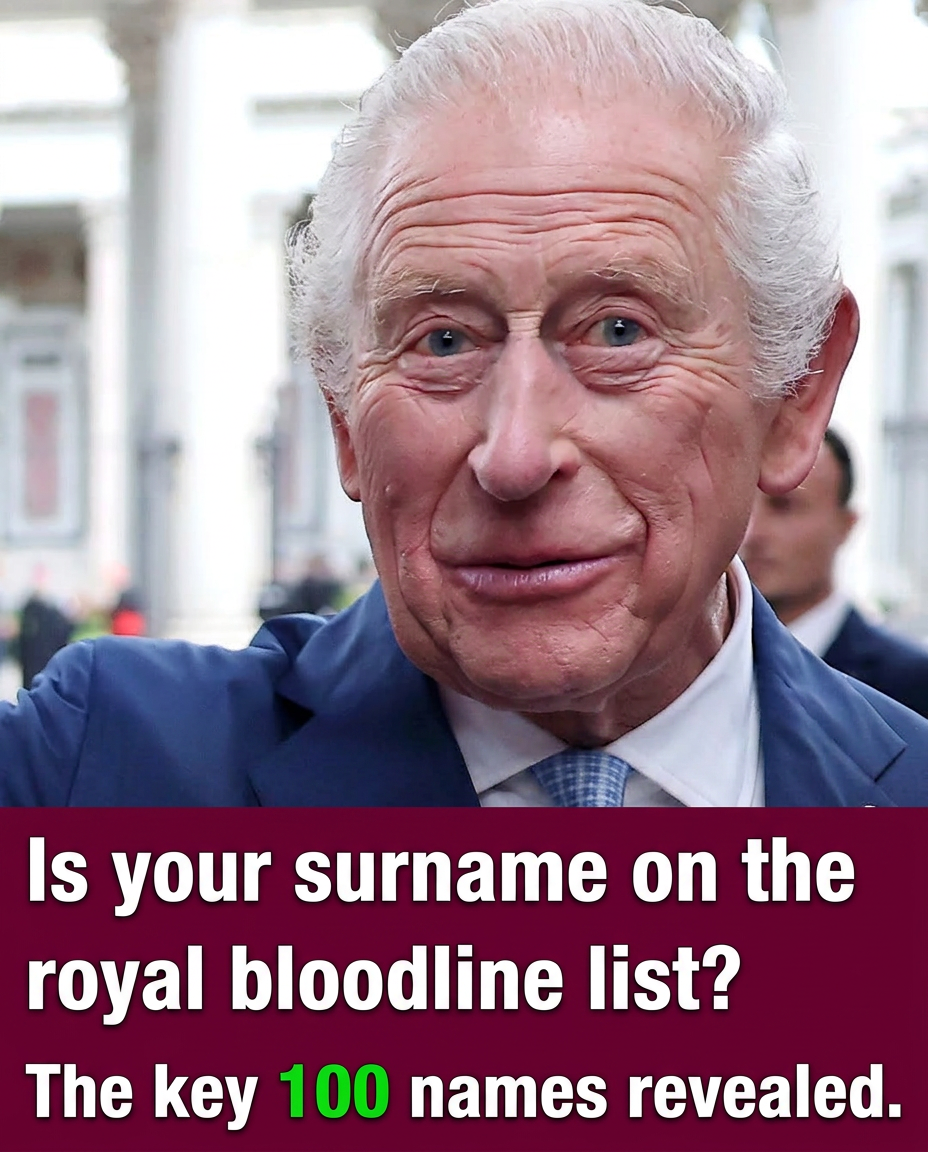
Have you ever glanced at your family tree and wondered if there is more to your story than meets the eye? For generations, the idea of having “royal blood” has been a captivating mystery for many, often dismissed as folklore. However, recent genealogical interest has brought attention to a list of surnames that may suggest, at the very least, a brush with history.
While the modern British royal family operates under the surname Mountbatten-Windsor, historical documents show that noble lineages have permeated society far more deeply than many realize.
More Than Just a Name
Genealogists, including researchers at platforms like MyHeritage, have spent years poring over historical records to identify surnames that frequently appear in the lineages of aristocracy and nobility. These lists, often inspired by classic genealogical texts such as Charles H. Browning’s 1891 work Americans of Royal Descent, are not a guarantee of a direct link to a crown, but they serve as a fascinating starting point for anyone interested in their own historical narrative.
The list includes a wide range of names, some of which are among the most common in the United States today. Names such as Smith, Johnson, Williams, and Taylor appear alongside more traditionally aristocratic surnames like Windsor, Tudor, Stuart, and Plantagenet.
What We Know
The Origin of the Lists: The surnames identified are derived from historical genealogical research and records of noble houses.
The Royal Surname: The British royal family adopted the double-barreled name “Mountbatten-Windsor” in 1952 to honor both the House of Windsor and Prince Philip’s heritage.
Historical Precision: The lineage of figures like the late Queen Elizabeth II has been traced back over 1,200 years, providing a documented record of ancestry that is rare in history.
Statistical Reality: Because of the way family trees expand over centuries, it is mathematically possible for many people to share a distant ancestor with a historical royal, even if they have no direct connection to modern royal life.
The Reality of “Royal Blood”
It is important to manage expectations: having a surname on a list does not automatically make someone a descendant of a king or queen. Surnames in the English language often have multiple origins, and common names like “Brown” or “Davis” were often adopted by different families for various reasons, including occupation or location, having nothing to do with nobility.
“Having one of these names doesn’t automatically make you royalty,” noted one recent genealogical study. “But it is a fascinating starting point if you’re curious about your ancestry.”
Why This Matters
For many Americans, tracing family roots is about more than just finding a famous ancestor. It is a way to feel connected to a larger, shared human history. In a time when global digital connectivity is at an all-time high, the desire to understand our personal origins is a powerful, shared emotional trigger. It speaks to our deep-seated need for identity and our curiosity about how the small, individual stories of our families fit into the grand timeline of world events.
Whether your name points to a castle or a cottage, the journey of discovery itself is often the real reward. Every family name carries its own unique history—and your own story may be just waiting to be uncovered in the records of the past.