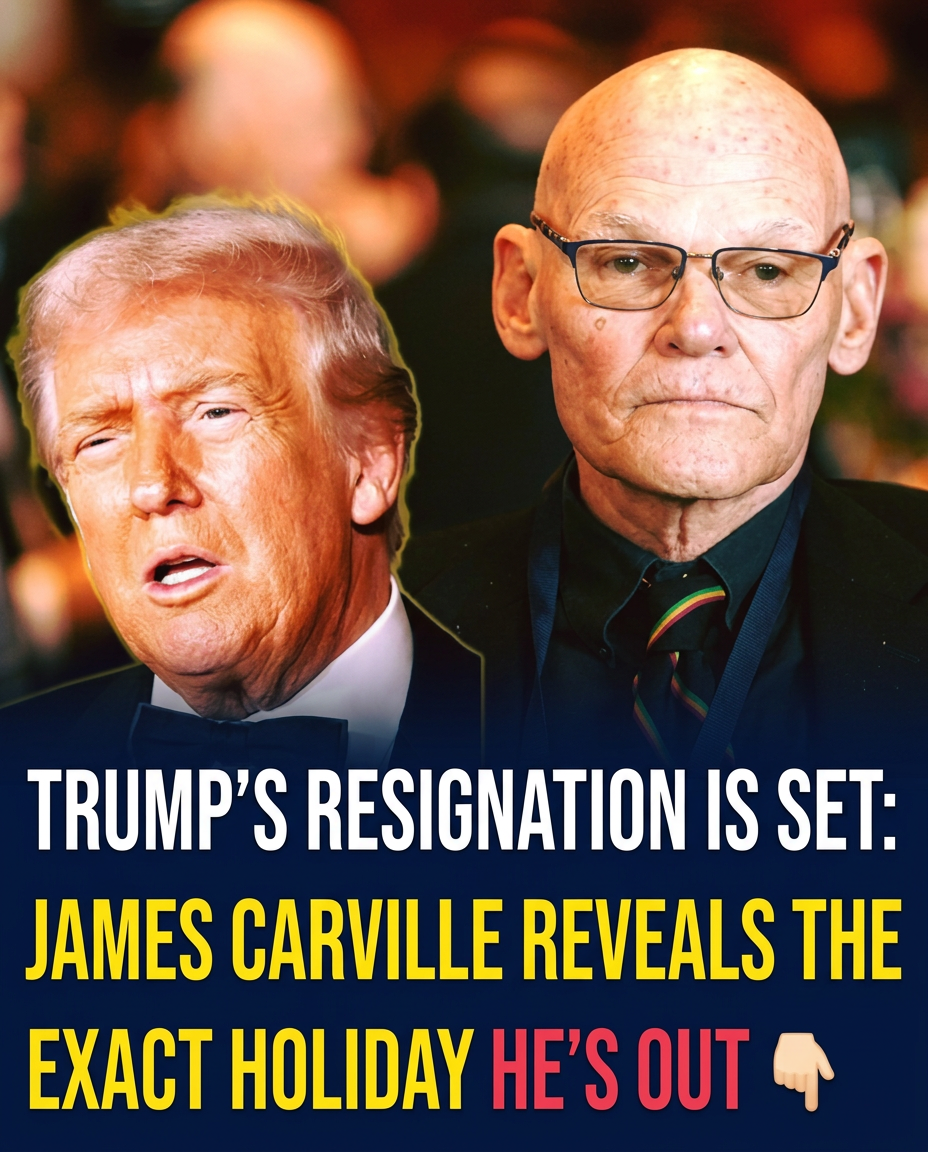
The political landscape is heating up again, and this time, all eyes are on a provocative prediction made by veteran Democratic strategist James Carville. Amid growing chatter about the future of the current administration, Carville has suggested that Donald Trump may not complete his full term in office.
The comments, made during a recent appearance on the Politics War Room podcast, have rippled through political circles, sparking intense debate just as the nation approaches a significant upcoming holiday.
A Season of Speculation
Carville’s theory centers on what he describes as an increasingly difficult governing environment. He points to a combination of electoral outcomes, shifting congressional power, and ongoing political pressure as factors that could force a change in the highest levels of government.
While Carville frames this as a potential outcome of political cycles, the White House has wasted no time in pushing back. Representatives officially dismissed the remarks, characterizing them as purely politically motivated and rejecting the narrative of an early departure.
What We Know
The Prediction: James Carville speculated on Politics War Room that political backlash could lead to Trump failing to finish his term.
Official Response: The White House has formally rejected these claims, labeling them as partisan attacks.
The Merchandise Factor: Interest has been heightened by the appearance of “Trump 2028” merchandise, which has fueled speculation about long-term political ambitions despite the constitutional two-term limit set by the 22nd Amendment.
The Context: There is no official evidence or verified data to support an early resignation; the discourse remains firmly in the realm of political opinion and commentary.
The “2028” Conversation
Adding fuel to the fire is the emergence of “Trump 2028” branding. To supporters, the merchandise serves as a symbol of momentum and political loyalty. To critics, however, it represents a provocative challenge to constitutional norms.
The 22nd Amendment is clear: U.S. presidents are restricted to two elected terms. While the merchandise has sparked heated discussion, legal experts maintain that any move toward a third term would require significant constitutional changes, a prospect that currently remains purely theoretical.
Why This Matters
For millions of Americans, this back-and-forth isn’t just noise—it’s a reflection of a deeply polarized nation. Whether or not you agree with Carville’s assessment, the conversation highlights a growing anxiety regarding political stability.
In a time when the gap between political factions feels wider than ever, every statement from a prominent voice like Carville acts as a lightning rod for broader public frustration. It raises a fundamental question for voters: How much of our political discourse is based on actionable reality, and how much is merely the byproduct of a high-stakes, 24/7 news cycle?
As the country moves toward the upcoming holiday, one thing is certain: the debate over the future of the current administration is far from settled. Expect the rhetoric on both sides to only intensify as the political calendar rolls on.