This Golden, Toothy Creature Looks Fake. It’s Not.
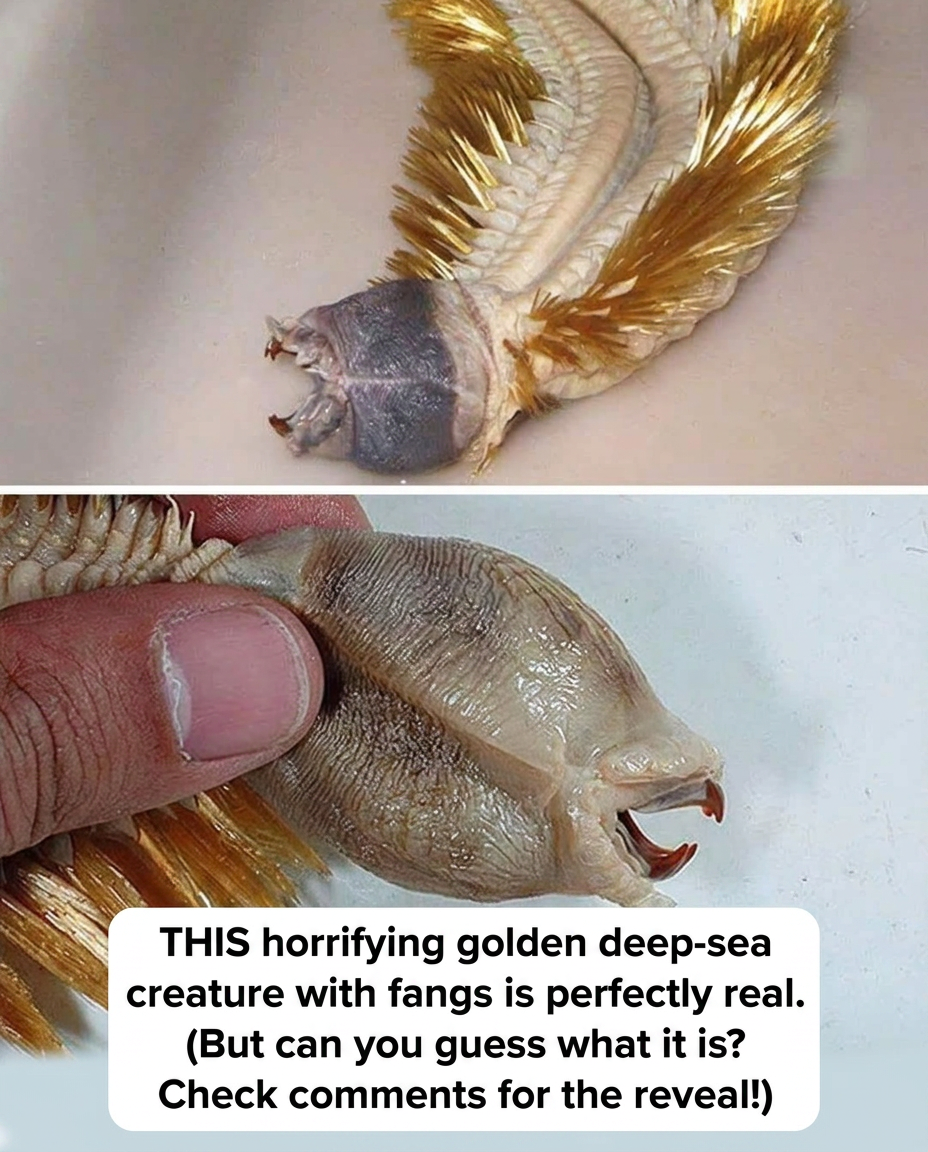
At first glance, it looks like a prop from a horror movie — a shimmering golden body wrapped around a mouth full of sharp, overlapping teeth. But this creature is real, alive, and crawling across the bottom of the Southern Ocean right now.
Meet the Antarctic Scale Worm
Its name is Eulagisca gigantea, commonly called the Antarctic scale worm. It lives on the seafloor near Antarctica, typically more than 500 meters below the surface, according to Live Science. Scientists first identified the species back in 1939, but specimens are rarely seen outside research collections — which is why photos of it tend to stop people mid-scroll.
The worm grows to about 20 centimeters, or roughly 8 inches — about the length of a banana. Its body is covered in golden, scale-like plates called elytra, which overlap like shingles on a roof.
A Mouth Built for Hunting
What really grabs attention is its head. The worm’s “face” is actually a retractable throat. When it feeds, that throat turns inside-out, exposing rows of sharp jaws — a structure scientists call an eversible proboscis.
Researchers believe the worm uses this mechanism to scavenge for food or hunt smaller animals on the seafloor, though its exact diet hasn’t been confirmed, according to Live Science.
Not New — But Still Shocking
Images of this worm have periodically resurfaced online for more than a decade. A 2012 post from the marine biology blog Deep Sea News described finding a specimen in a research collection and called it “nightmare fuel.” Similar reactions followed when photos circulated again in 2017 and 2018.
Each time, the response is the same: disbelief that something this strange-looking exists in nature, paired with fascination at its glittering, almost ornamental appearance.
Why This Matters
The Antarctic scale worm belongs to a much larger group — polychaetes, or bristle worms — which includes more than 8,000 known species living everywhere from shallow reefs to deep-sea vents. A 2016 study estimated that researchers may have only identified about half of all marine worm species that actually exist.
That gap matters. Every newly studied deep-sea organism helps scientists understand how fragile polar ecosystems function — ecosystems that are already under pressure from warming oceans. Creatures like Eulagisca gigantea aren’t just oddities; they’re part of the food web that supports life in some of the harshest environments on Earth.
The Bigger Picture
The worm’s golden bristles and toothy “smile” make for a striking photo. But scientists say the real story isn’t how strange it looks — it’s how much of the deep sea remains unexplored.
As ocean researchers continue mapping the Antarctic seafloor, more creatures like this one are likely to surface. And each one is a reminder: the strangest life on our planet might not be out in space at all. It might be a few hundred meters beneath the waves, waiting to be photographed.