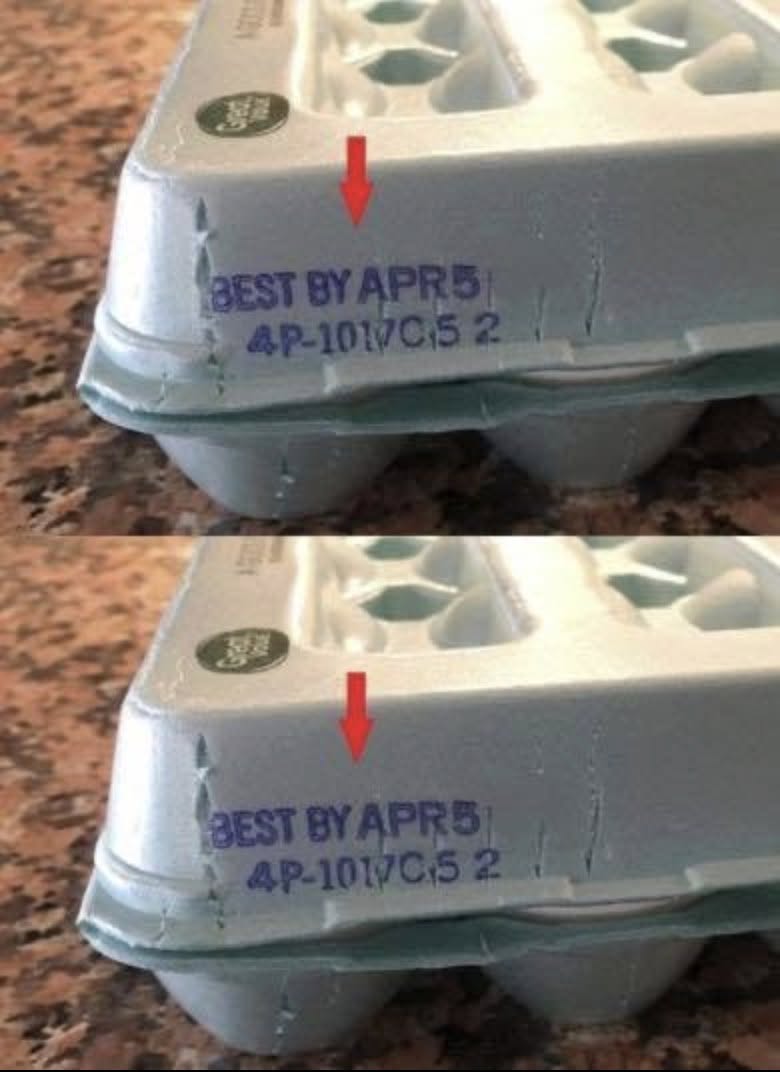
Right next to the date on your egg carton, there’s a three-digit number most people have walked past a thousand times — and it’s quietly telling you something the “sell-by” date never will.
It’s called the Julian date, and according to the USDA, it’s printed on every egg carton bearing the official grade shield. The number, ranging from 001 to 365, represents the exact day of the year your eggs were washed, graded, and packed into that carton. January 1st is 001. December 31st is 365. No calculator required — just a calendar.
The Number Nobody Taught You to Read
For most shoppers, the sell-by date feels like the only thing that matters. But the USDA says that date can legally be set up to 30 days after the pack date — meaning a carton sitting “fresh” on the shelf could already be weeks old before it ever reaches your cart.
The Julian date cuts through that. It tells you the actual day those eggs left the farm and were boxed up, not just a retailer’s inventory deadline.
The Letter ‘P’ Tells Its Own Story
Next to the Julian date, shoppers often spot a code starting with the letter “P,” followed by several digits. According to the USDA and food-safety extension programs, that’s the plant code — it identifies the exact USDA-inspected facility that processed the eggs.
It’s not just trivia. If a recall is announced, the plant code is how regulators and consumers determine whether a specific carton is affected.
So How Old Is Too Old?
Here’s the reassuring part: a sell-by date passing doesn’t mean your eggs are suddenly unsafe. Federal guidance indicates refrigerated eggs typically stay good for about four to five weeks past the pack date, as long as they’ve been kept cold the whole time. The sell-by date is mainly a tool for store inventory — not a safety cliff edge.
Still, eggs do change over time. Older eggs lose moisture and carbon dioxide, which can make yolks more fragile and whites runnier, and the risk of foodborne illness can increase if eggs aren’t stored properly.
Why This Matters
At a time when grocery bills — especially egg prices — have become a flashpoint for American households, this small code hands shoppers something rare: real information the system doesn’t advertise. It’s a free, built-in freshness check hiding on packaging millions of people handle every week without a second glance.
Knowing how to read it means fewer wasted dozens, fewer “is this still good?” gambles, and a little more control in a grocery aisle that often feels like it’s working against you.
Next time you reach for a carton, flip it over. That tiny number has been telling you the truth all along — you just had to know how to read it.