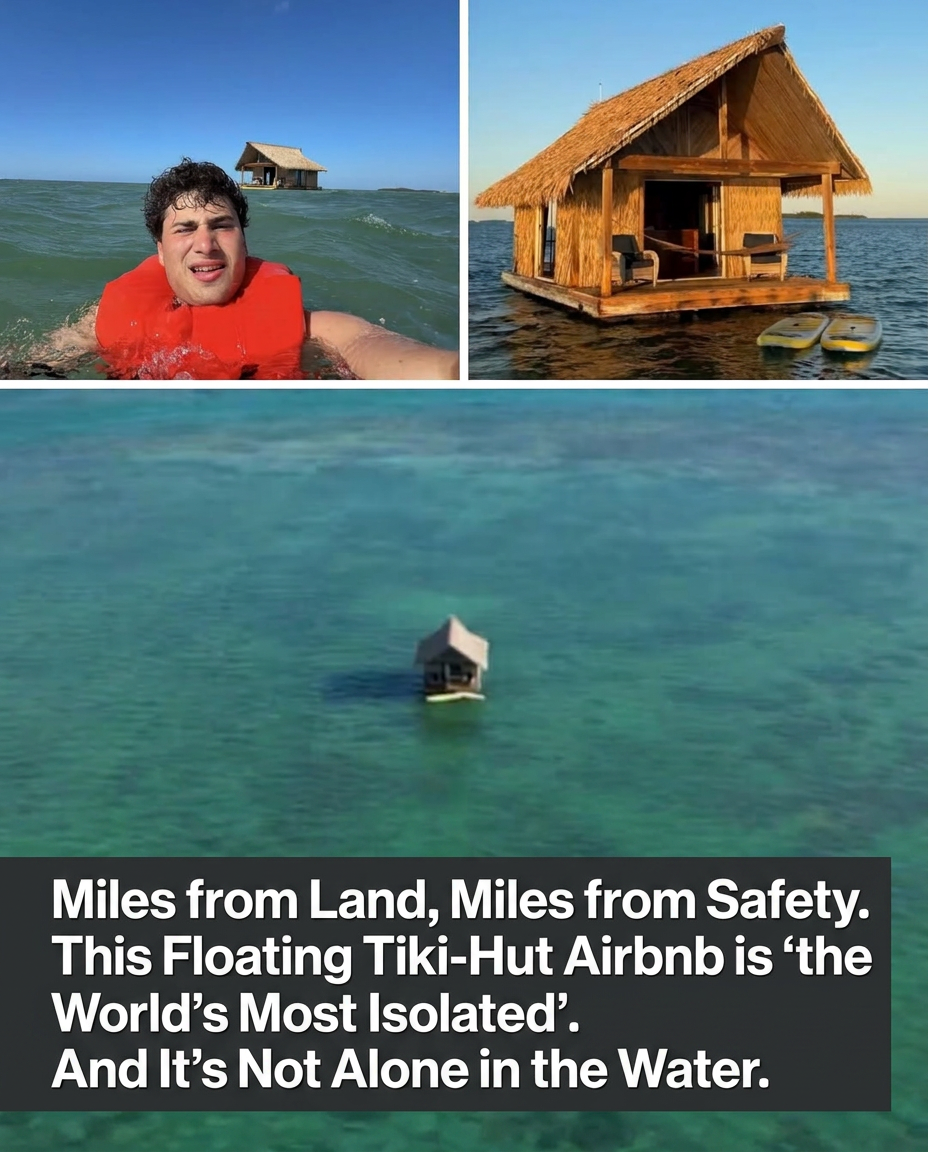
The promise is simple: wake up with nothing but the sunrise and the gentle lap of the ocean against your floorboards. In the shallow backcountry waters off the coast of Key West, Florida, a booming industry of “floating tiny homes” and “tiki suites” is redefining what it means to get away from it all. But for travelers trading hotel hallways for open water, the experience often balances on a fine line between a dream vacation and a logistical challenge.
The Appeal of Absolute Isolation
These floating bungalows have become a social media sensation, marketed to those desperate to trade city noise for complete solitude. The structures—ranging from handcrafted tiki huts to repurposed cottages—sit anchored in open water, accessible only by captained boat or pre-arranged transport.
Once there, guests are essentially “marooned.” The allure is undeniable: 360-degree views, direct ocean access for paddleboarding and snorkeling, and the absence of neighbors. For many, it is the ultimate “glamping” upgrade, offering a connection to nature that a traditional beachfront resort simply cannot replicate.
When ‘Off-Grid’ Hits Reality
However, the romanticized version of boat life often clashes with the practicalities of living on the water. Because these homes operate independently, they rely on solar arrays, limited water tanks, and marine-style toilets.
Recent guest feedback highlights the “hidden” side of this remote luxury. While some visitors describe the experience as a “magical slice of paradise,” others have reported friction when the elements don’t cooperate. Because the power is solar-dependent, a few cloudy days can lead to a shortage of hot water. Others have reported issues with fresh water availability or delays in transport back to the mainland, turning a relaxing getaway into a test of patience.
What We Know
Access: All floating bungalows in these areas require boat transport to reach; they are not accessible by car or foot.
Amenities: These homes are “off-grid,” meaning limited hot water, solar power, and specific instructions for marine toilets are standard.
Logistics: Guests are often required to bring their own supplies, including food and drinks, as they are anchored away from stores or delivery services.
Costs: Stays can range from a few hundred to over $1,000 per night, depending on the season and specific rental features.
Why This Matters
The surge in popularity for these remote rentals speaks to a broader cultural shift. As our daily lives become increasingly hyper-connected and “always-on,” the desire to pay for temporary disconnection—even if it comes with the risk of a cold shower—is stronger than ever.
We are moving away from the “all-inclusive” resort culture toward experiential, high-risk, high-reward travel. It reflects a growing segment of the U.S. tourism market that values unique, shareable content over comfort and convenience. For the modern traveler, the “adventure” of potentially running out of water or waiting for a boat in the wind is no longer a deterrent; it’s part of the story they’re buying.
Whether this trend is the future of sustainable tourism or a passing fad, one thing is clear: people are increasingly willing to pay a premium to be completely, utterly alone—even if only for a night.